Blue Sky Solar Racing - structural and manufacturing lead
Design & Manufacturing · World Solar Challenge · 2022–2023
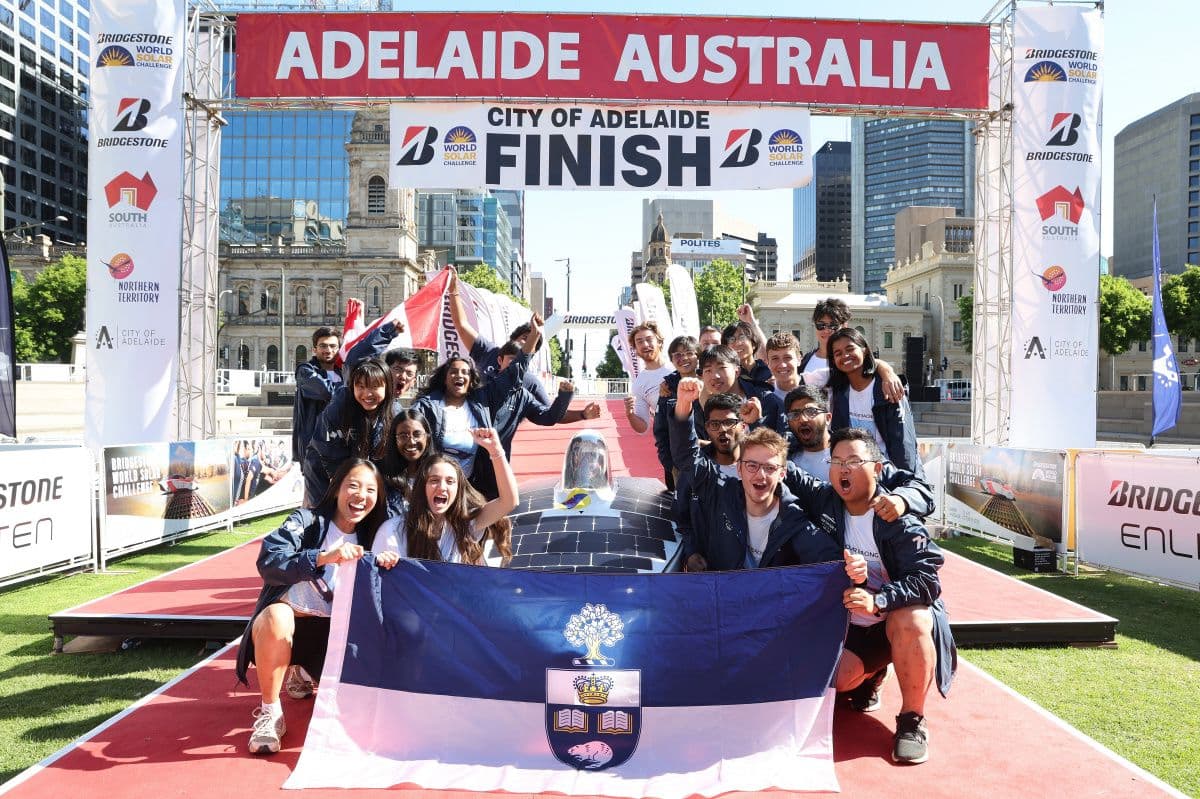
I was the Chief Structural and Manufacturing Engineer for the University of Toronto's Blue Sky Solar Racing team, where we designed and built a road-legal solar car that raced more than 3,000 km across the Australian Outback in the World Solar Challenge. My role was to make sure the car was not only designed well, but could actually be manufactured, assembled, and trusted under race conditions.
- Role: Chief Structural and Manufacturing Engineer
- Event: Bridgestone World Solar Challenge
- Focus: composite structures, plug and mold design, and manufacturing planning
- Team: multidisciplinary student team across mechanical, electrical, strategy, and solar
Role and scope
As structural and manufacturing lead, I was responsible for a large portion of the car's composite build process, from structural decisions and laminate planning to molds, tooling, and shop execution. If a part needed to carry load, fit correctly, or be built efficiently, it usually came through our team.
A big part of the role was translating high-level design goals such as low weight, sufficient stiffness, and manufacturability into practical manufacturing decisions. That meant thinking not only about geometry, but also about tooling splits, layup schedules, fabrication sequence, and what the team could realistically execute on a tight timeline.
Composites, tooling, and process improvement
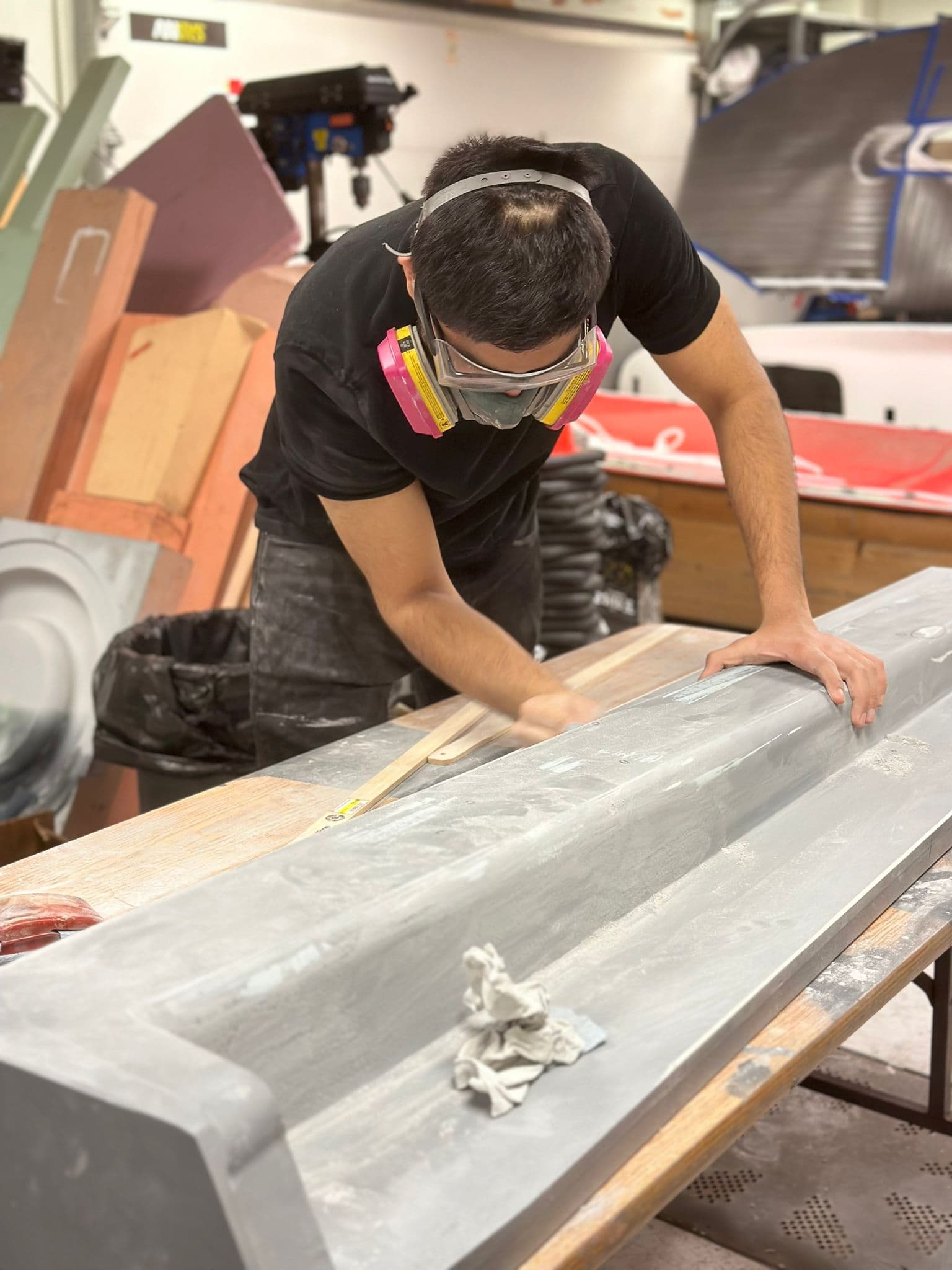
I led the design and manufacturing of gelcoat and fiberglass molds for major aero body components, including the bottom shell and fairings. This involved working closely with CAD, manufacturing, and shop processes to decide how molds should be split, where flanges should go, and how to maintain tolerances while staying within our time and budget constraints.
On the manufacturing side, I helped develop and refine our carbon fiber layup procedures for both wet layups and infusion-based parts. I also worked on plug development and tooling workflows, including process improvements that reduced 3D printing and finishing time by about 20% while keeping part quality consistent.
We also carried out structural checks and smaller validation efforts before committing to full-scale components, which helped reduce risk and improve confidence in the final build.
Teamwork and race impact
This work depended on constant coordination with other subteams. Structural choices affected packaging, solar array integration, cooling, and race strategy, so I often worked across boundaries to make sure the design could actually be built and assembled without compromising performance.
The project felt a lot like working on a small hardware startup. There were hard deadlines, physical consequences if parts failed, and very little room for disconnect between design and execution. It gave me real experience in composites, design for manufacturing, and leading engineering work under pressure.
What I learned
Blue Sky Solar was one of the most important experiences I had in learning how manufacturing reality shapes engineering design. It pushed me to think in terms of layup direction, demold angles, cure planning, tooling limitations, and shop throughput rather than just ideal CAD geometry.
It also gave me experience leading people through a long and demanding hardware build. I learned how to train newer members, make tradeoffs under constraints, and keep a team moving when schedules are tight and the final deadline does not move.
Tech and processes
- Carbon fiber and Kevlar layups
- Wet layup and infusion-based composite processes
- Gelcoat and fiberglass plug and mold design
- CAD for surfacing, tooling, and mold splitting
- Basic structural validation and design checks
- 3D printing for plugs and tooling development
- Process improvement for composite manufacturing