LDED Thesis - melt pool monitoring with machine learning
AI & ML · Undergraduate thesis · 2023–2025
For my undergraduate thesis, I worked in the Laboratory for Extreme Mechanics and Additive Manufacturing on optimizing Laser Directed Energy Deposition using high-speed infrared imaging and machine learning. My work focused on building a high-throughput experimental pipeline and regression models to connect melt pool behavior and surface features to print quality.
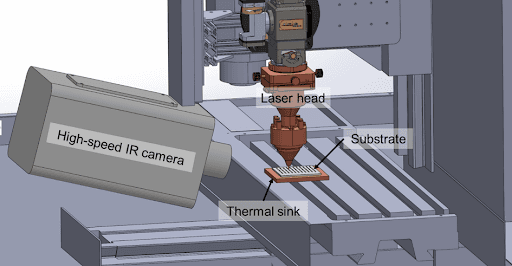
- Process: Laser Directed Energy Deposition with high-speed IR monitoring
- Design space: 360+ unique combinations of laser power, scan speed, and feed rate
- Features: melt pool stability, morphology, sputter density, and geometric track metrics
- Models: linear regression, tree ensembles, and neural networks for quality prediction
Motivation and approach
LDED is a promising additive manufacturing process for repairing and fabricating high-value metal components, but print quality is highly sensitive to melt pool behavior. Small process changes can lead to unstable deposition, poor track formation, or downstream defects, which makes in-situ monitoring especially important.
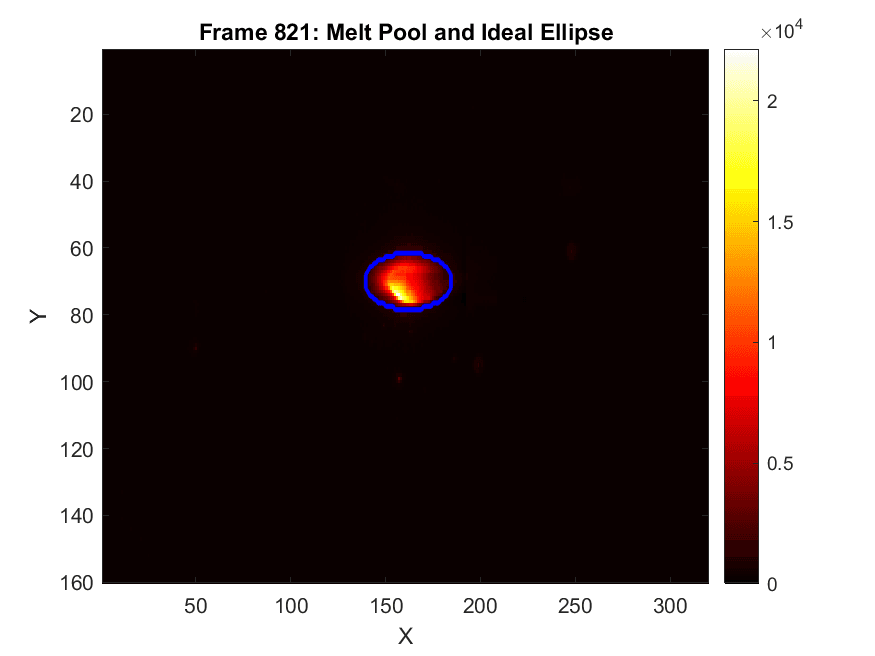
To study this, I helped build a high-throughput experimental matrix that systematically varied laser power, scan speed, and powder feed rate. For each condition, a high-speed IR camera recorded melt pool evolution while 3D scans captured the final track geometry, giving us both dynamic and post-process views of the build.
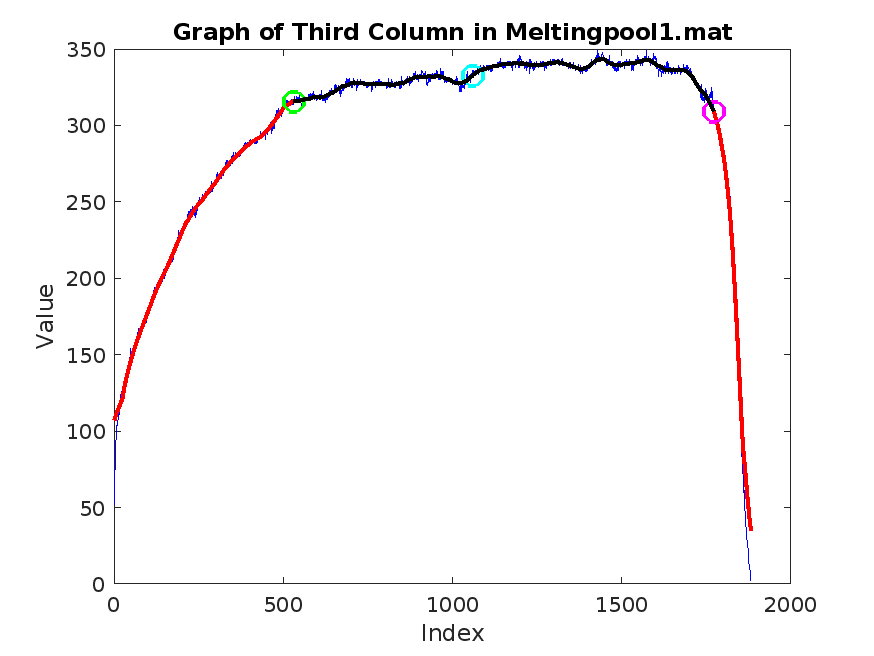
From this dataset, I extracted features related to melt pool stability, morphology, sputter activity, and surface geometry. These were then used as inputs to regression models designed to predict print quality and identify more stable operating regions within the process space.
Modelling and key findings
I implemented a regression pipeline comparing linear models, decision trees, extra-trees ensembles, and feed-forward neural networks to predict melt track height, melt pool area, a stability metric, and a combined stability plus surface roughness score.
One of the clearest findings was that melt pool stability, especially when captured through steady-state duration and variability, was a much stronger predictor of print quality than morphology or sputter density alone. Models that combined stability with geometric features produced the best results, reinforcing the value of using both in-situ and post-process information together.
This work helped show that dynamic monitoring signals can provide more meaningful insight into process quality than static measurements on their own, which is important for future real-time monitoring and control strategies in additive manufacturing.
Publication and thesis
I joined the lab as an undergraduate thesis student and contributed to a broader PhD-led research effort on melt pool morphology and process stability in LDED. Working on the experiments, feature extraction, and modeling for that project was a major part of my thesis experience and gave me valuable exposure to research in a real lab setting.
Journal article
The group's broader work on melt pool morphology and stability in LDED was published in the Journal of Manufacturing Processes in 2025.
“Mechanism and quantification of melt pool morphology evolution in laser directed energy deposition,” Journal of Manufacturing Processes, 2025. DOI: 10.1016/j.jmapro.2025.10.097
View paper ↗Undergraduate thesis
My thesis, “Optimization of Laser Directed Energy Deposition Additive Manufacturing Process with High-Speed IR Cameras”, focused on building a high-throughput monitoring framework and training regression models to predict print quality from combined dynamic and static features.
Read thesis (PDF)