Helping Hand - assistive design for wheelchair users
Design & Manufacturing · Coursework · 2022
This project was completed as part of Praxis II, where my team worked on improving the lived experience of powered wheelchair users. After exploring the initial design brief, we reframed the problem to focus on mitigation, designing a solution that helps users retrieve dropped objects rather than trying to prevent drops entirely.
- Context: Praxis II assistive design project
- Focus: improving accessibility and user independence
- My role: concept refinement, CAD design, animations, and engineering drawings
- Outcome: a wheelchair-mounted retrieval concept for small personal items
Understanding the problem
The project began with a broad challenge around powered wheelchair accessibility. Through stakeholder conversations and team discussions, we realized that trying to prevent dropped objects entirely was too broad and less practical than focusing on what happens after something falls.
That led us to reframe the opportunity around retrieval. We focused on creating a concept that would be safe, usable, and realistically integrated into a wheelchair user's day-to-day experience. This part of the project strengthened my ability to work through ambiguous design problems and align technical decisions with real user needs.
Designing the solution
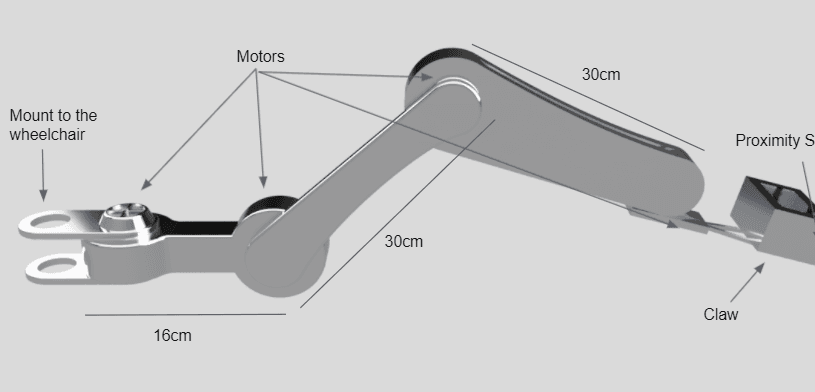
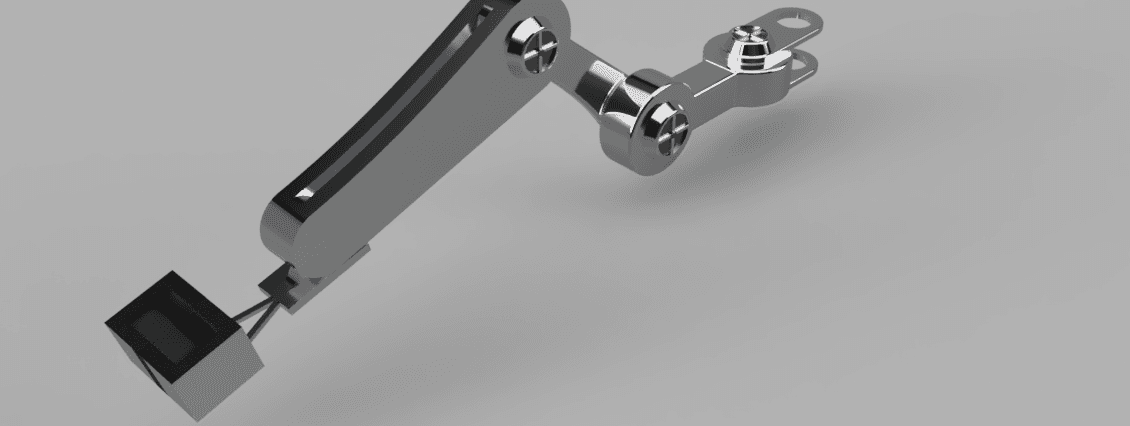
Our final concept, the Helping Hand, was selected after an extended concept generation and evaluation process. I was primarily responsible for the technical design work, including CAD modeling, mechanism refinement, animations, and detailed engineering drawings.
The device mounts to the wheelchair and uses a linkage-based arm to reach and retrieve small objects such as keys, cards, wallets, or other personal items. The design emphasized ease of use, practical motion, and manufacturability while keeping the interaction simple for the user.
What I learned
This project gave me hands-on experience with user-centered design in a way that went beyond just building a mechanism. It reinforced the importance of stakeholder input, clear communication, and careful problem framing when designing for real users.
It also helped strengthen my CAD skills and my ability to translate early concepts into detailed technical representations that could be communicated clearly to teammates, instructors, and stakeholders.