Dynamic Solar Windows at AP2D and 3ENano
Design & Manufacturing · Research · 2022–2023
I spent a summer in Professor Nazir Kherani's Advanced Photovoltaics, Photonics and Devices Lab, working with 3ENano on dynamic window concepts designed to improve thermal insulation in buildings. The project focused on using simulation to study how window structure, spacer design, and coating placement affect heat loss and overall performance.
- Collaborators: AP2D Lab at UofT and 3ENano
- Focus: thermal performance of coated multi-pane window systems
- Tools: THERM and WINDOW for simulation and comparison
- Key outcome: showed how spacer design, pane configuration, and coating placement can significantly improve insulation performance
Research context
Windows are one of the biggest sources of energy loss in buildings, especially when thermal bridging and poor insulation reduce their effectiveness. The goal of this project was to study how dynamic window configurations and advanced coatings could improve thermal performance without sacrificing practical use in real buildings.
My role combined literature review, simulation, and comparative analysis. I studied existing glazing technologies, spacer materials, coating strategies, and pane configurations, then translated those ideas into simulation models that could be tested under different conditions.
Simulation workflow
I used THERM and WINDOW to build and compare different insulated glazing unit configurations, including:
- Double- and triple-pane window systems with varying gap widths
- Different spacer materials and geometries to reduce thermal bridging at the edges
- Coating placements across different glazing surfaces to evaluate their effect on heat transfer
- Seasonal conditions to compare behaviour across colder and warmer environments
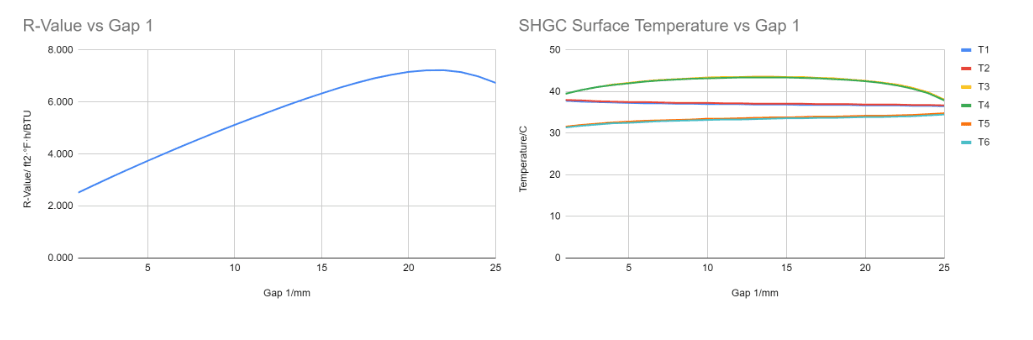
For each configuration, I compared metrics such as R-value, U-value, and interior surface temperature behaviour to understand how design choices affected both comfort and insulation performance.
Findings and impact
The simulations showed that relatively small design changes could have a meaningful effect on window performance. Spacer design, gap width, and coating placement all influenced thermal resistance, with better combinations helping reduce heat loss and stabilize interior surface temperatures.
In particular, higher-performance multi-pane configurations offered clear gains over more standard setups, especially when thermal bridging was addressed and coatings were placed strategically. The work helped connect simulation results to practical product considerations for 3ENano and gave the team clearer insight into which design directions were worth exploring further.
What I learned
This project gave me early experience working between academic research and industry application. I learned how to build fair comparisons between design options, extract useful conclusions from simulation data, and communicate technical findings to both researchers and industry stakeholders.
It also strengthened my interest in work that sits between engineering analysis, product thinking, and practical implementation. I liked the challenge of taking a broad technical problem, breaking it into testable variables, and using data to support design decisions.
Tech and methods
- THERM and WINDOW for thermal modelling
- Literature review on glazing and coating technologies
- Comparison of R-value, U-value, and surface temperature trends
- Report writing and presentations for 3ENano